Live-fire cook chart
Choose a food type or fire setup to narrow the chart. Each row shows where to cook it, how hot, and the safe minimum internal temperature.
19 foods match.
| Food | Fire setup | Heat (hand test) | Safe minimum internal temperature | Fire note |
|---|---|---|---|---|
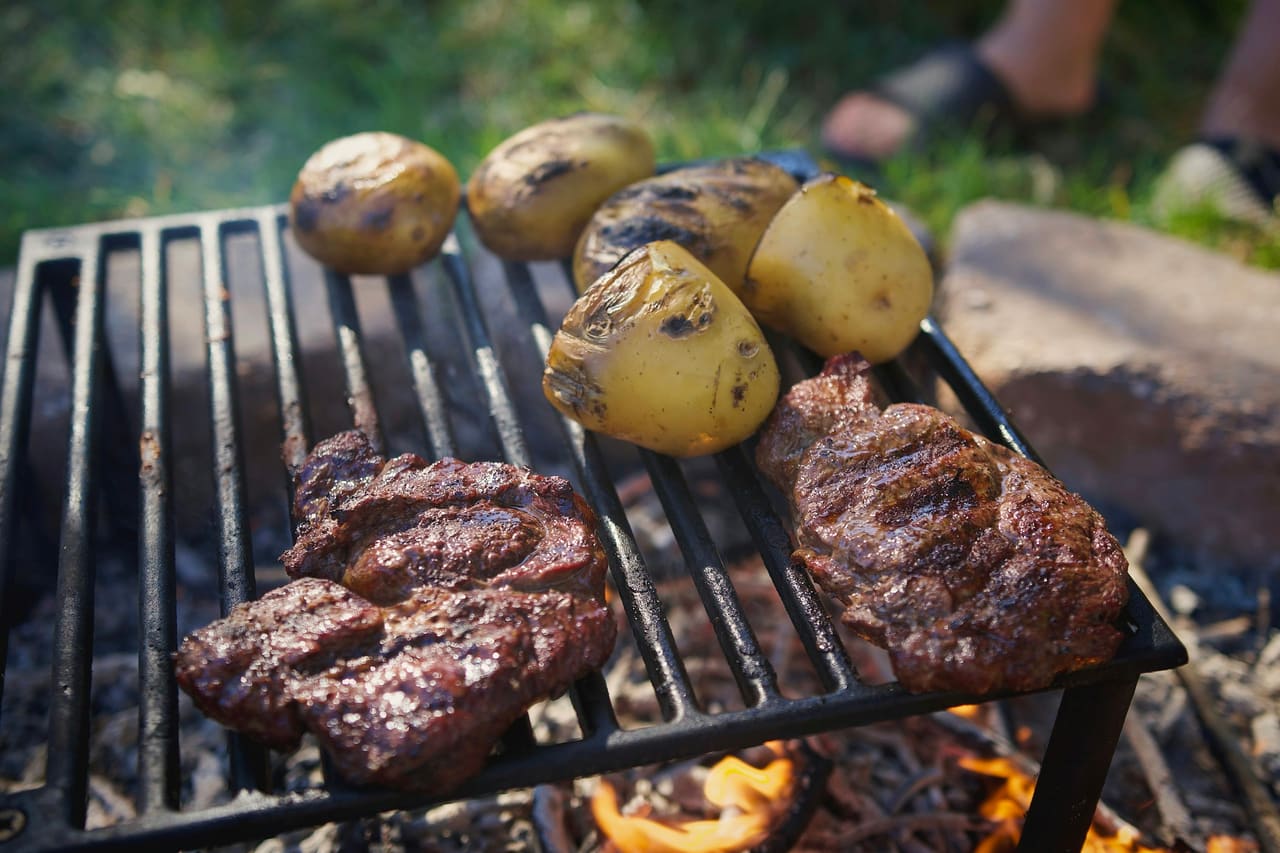
| Steak, 2–3 cm thick | Direct heat (over the coals) | High (2 to 3 seconds) | 145°F (63°C), then rest 3 minutes | Turn every minute or two for even cooking. |
| Thick steak or chop, 4 cm or more | Sear direct, finish indirect | High (2 to 3 seconds) | 145°F (63°C), then rest 3 minutes | Sear both sides, then move to the cool zone until it reaches temperature. |
| Lamb chops | Direct heat (over the coals) | Medium-high (4 to 5 seconds) | 145°F (63°C), then rest 3 minutes | Fat drips cause flare-ups; keep the cool zone free to dodge them. |
| Burgers (ground beef or lamb) | Direct heat (over the coals) | Medium-high (4 to 5 seconds) | 160°F (71°C) | Ground meat must reach 160°F throughout; colour is not a reliable test. |
| Beef roast or brisket | Indirect heat (beside the coals, lid or cover) | Low (8 to 10 seconds) | 145°F (63°C), then rest 3 minutes | Brisket is usually cooked far past the safe minimum, until tender. |
| Pork chops | Sear direct, finish indirect | Medium-high (4 to 5 seconds) | 145°F (63°C), then rest 3 minutes | Lean chops dry out quickly once past temperature. |
| Pork shoulder | Indirect heat (beside the coals, lid or cover) | Low (8 to 10 seconds) | 145°F (63°C), then rest 3 minutes | Cooked well beyond the minimum, until it pulls apart. |
| Sausages (raw) | Sear direct, finish indirect | Medium (6 to 7 seconds) | 160°F (71°C) | Ground meat; finish in the cool zone to avoid burst casings. |
| Whole chicken | Indirect heat (beside the coals, lid or cover) | Medium (6 to 7 seconds) | 165°F (74°C) | Check the thickest part of the thigh and breast, away from bone. |
| Chicken thighs or drumsticks | Sear direct, finish indirect | Medium (6 to 7 seconds) | 165°F (74°C) | Skin side down first in the cool zone, then crisp over the coals. |
| Chicken breast | Direct heat (over the coals) | Medium (6 to 7 seconds) | 165°F (74°C) | Even the thickness first so it cooks through before drying out. |
| Whole fish | Direct heat (over the coals) | Medium (6 to 7 seconds) | 145°F (63°C) or flesh opaque and flakes with a fork | Oil the grate and the fish; turn once. |
| Fish fillets on a plank | Indirect heat (beside the coals, lid or cover) | Medium (6 to 7 seconds) | 145°F (63°C) or flesh opaque and flakes with a fork | Soak the plank first; keep a spray bottle nearby. |
| Shrimp, scallops, mussels | Direct heat (over the coals) | High (2 to 3 seconds) | Shrimp and scallops opaque and firm; shells open on mussels and clams | Discard any shellfish that do not open. |
| Corn in the husk | Direct heat (over the coals) | Medium (6 to 7 seconds) | No minimum (plant food) | Turn every few minutes until husks char. |
| Potatoes or squash wrapped in foil | In or on the embers | Medium (6 to 7 seconds) | No minimum (plant food) | Bury in embers, not flame; done when a skewer slides in. |
| Peppers, onions, aubergine | In or on the embers | High (2 to 3 seconds) | No minimum (plant food) | Cook directly on embers until blackened, then peel. |
| Flatbread | Direct heat (over the coals) | High (2 to 3 seconds) | No minimum | Bubbles in under a minute; flip once. |
| Stone fruit and pineapple | Direct heat (over the coals) | Medium-high (4 to 5 seconds) | No minimum (plant food) | Grill cut side down for grill marks without mush. |
How to read the chart
- Heat level uses the hand test: how many seconds you can hold your palm about 12 cm above the grate. It is approximate; pull away as soon as it is uncomfortable.
- Safe minimum internal temperatures are from the USDA chart published on FoodSafety.gov. Measure with a food thermometer in the thickest part, away from bone.
- Cooking times are not listed because fire heat varies too much with fuel, wind, and grate height to give honest numbers. Cook to temperature, not to the clock.
New to the setups? Start with how to build a two-zone fire.